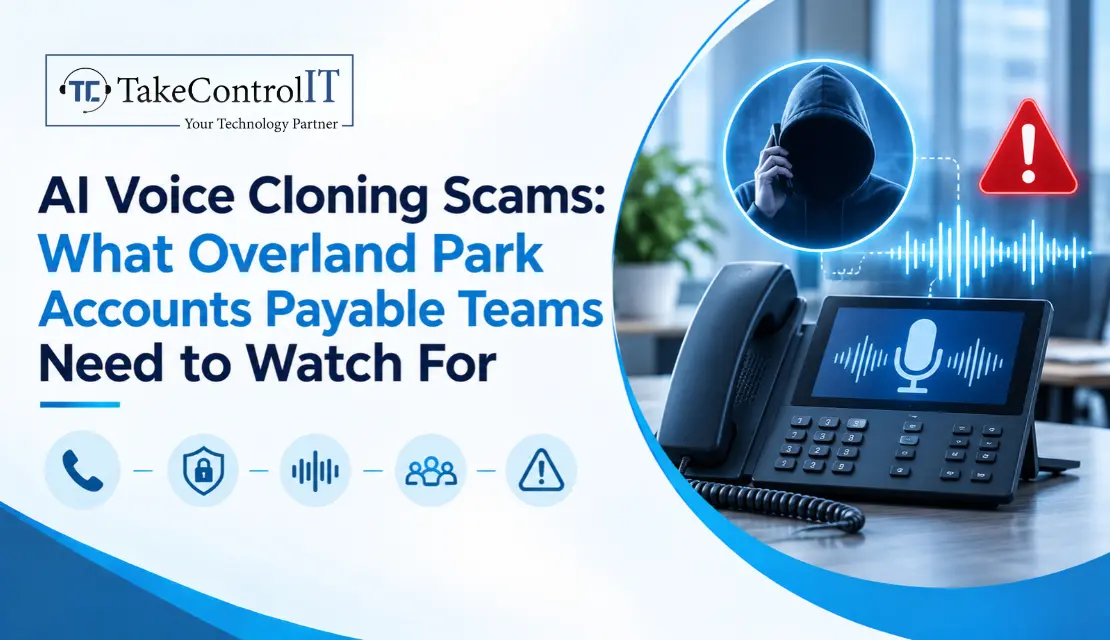

An accounts payable clerk in Overland Park picks up the phone. It’s the CFO, sounding a little rushed, asking to push a vendor payment through before the end of day. The voice is exactly right. The pause before “thanks” is exactly right. And it’s not the CFO at all.
That’s how AI voice cloning scams work, and they’re getting harder to spot. A few seconds of audio can be enough to copy a familiar voice, which means “I recognized who it was” is no longer proof. Here’s what AP teams should watch for, and a simple process that stops most attempts.
Criminals use AI to copy a real person’s voice from a short clip, then use it in a call or voicemail to request money or information. The audio often comes from places executives never think about: podcasts, webinars, social videos, voicemail greetings and conference recordings.
You’ll see several names for the same threat, including voice cloning scams and AI voice scams. They differ from classic voice phishing scams in one important way. In the old version, a stranger tried to sound official. Now the caller sounds like someone you work with.
AP sits close to the money. Teams also tend to be busy, and requests from leadership usually get fast action. A few things make it worse:
The numbers are getting hard to ignore. The FBI’s 2025 Internet Crime Report, released April 6, 2026, was the first to include an AI category, with 22,364 complaints and roughly $893 million in losses referencing AI. The FBI also said voice cloning is being used to authorize fraudulent money transfers by phone.
To keep it in perspective, business email compromise overall cost $3.05 billion across 24,768 complaints in 2025, and the AI-involved portion was just over $30 million. That’s a floor based on what victims recognized and reported, but it’s a reminder to stay accurate and not panic. The risk is real and rising, and it’s still beatable with process.
Most of these AI voice scams fall into a few patterns:
Many of these are voice phishing scams layered on top of a spoofed email, which is why one verified call matters so much.
Listen for these warning signs:
Don’t rely on “it sounded off” alone. Cloned voices can be very convincing, so the process has to do the work. The same pressure tactics show up in QR code phishing, so train your staff on both.
Strong AI voice fraud prevention comes down to rules that don’t depend on recognizing a voice:
Voice-based checks may now be vulnerable on their own, so organizations should consider multi-factor and behavioral authentication as well. Treat any plan as a mix of people, process and technology. adamsandreese
Move quickly. Time matters when money has already left.
Professional services, construction, healthcare and distribution firms across Overland Park, Johnson County and the greater Kansas City area all run accounts payable and all publish executive voices online. That makes voice cloning fraud a local problem, not just a headline.
On the technology side, you’ll want phone and email security, multi-factor authentication, call logging and regular staff training working together. Our look at AI agents as a new cybersecurity risk covers the wider AI threat picture, and our rundown of core cybersecurity services every business needs shows what a solid baseline includes. If an attacker gets a login instead of a payment, session hijacking is the next risk to understand.
If you’d like help building those controls around your finance team, managed IT consulting Overland Park businesses already trust can help you review your processes and close the gaps.
AI voice cloning scams work because they borrow trust. The fix isn’t to distrust everyone. It’s to build a process where trust alone never moves money.
A call-back rule, dual approval and a little training stop most of these attempts. They cost almost nothing, and they protect the people who handle your payments every day.
Is Your Finance Team Ready for Voice Cloning Scams?
TakeControl IT offers a free payment-fraud and security awareness review for local finance teams. We’ll look at your approval steps, phone and email protections and training so you can close weak spots before a convincing call tests them.
Call us or contact TakeControl IT today to schedule your review.
1. What are AI voice cloning scams?
They’re scams where criminals use AI to copy someone’s voice, then use it on a call or voicemail to request payments or sensitive information. The cloned voice makes the request feel genuine.
2. How do scammers clone someone’s voice?
They collect a short audio sample from public sources like videos, podcasts or voicemail greetings, then feed it into AI software that generates speech in that voice.
3. How can you tell if a voice call is AI generated?
You often can’t by listening alone. Watch for urgency, unusual requests, odd pauses or a refusal to be called back, and verify through a known number.
4. How can businesses prevent voice cloning fraud?
Use call-back verification, dual approvals, cooling-off periods for bank changes, code phrases and staff training that includes real examples.
5. What should you do if you get a call from a cloned voice?
Hang up, don’t act on the request, and call the person back on a known number. If money moved, contact your bank, notify IT and report it at IC3.gov.
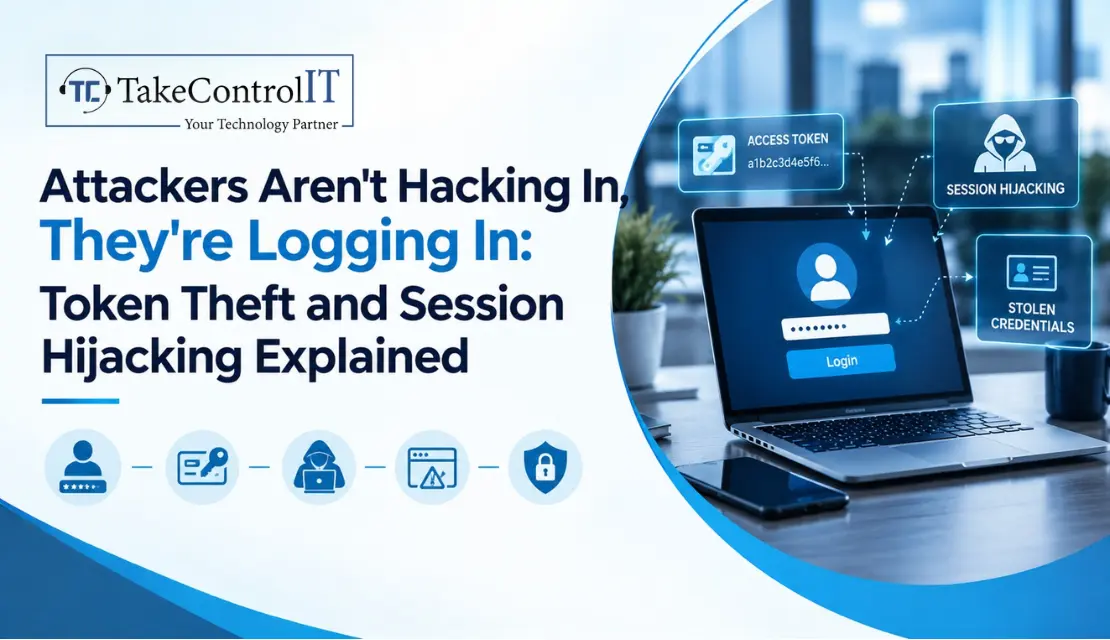
Picture an employee who logs in with a strong password and approves the MFA prompt. Everything looks fine. Two days later, someone else is sitting...








 Latest Blogs

What exactly is Fixed-Cost IT Support? Fixed-cost IT support is a type of IT assistance in which companies pay a...
Get Started

Computers and Networks That Are Too Slow Slow computers and networks are one of the most prevalent recurrent IT issues...
Get Started
Signs of an Issue: Slow Performance: Noticeably sluggish computer or network operations may indicate malicious activity taxing your system’s resources...
Get Started